
'Our brave Indian soldiers don't reply to raining of bricks with mere sticks, they do so with iron rods'

The two leaders are understood to have discussed ways to expand bilateral ties. The 30-minute meeting took place on the sidelines of the ASEAN-India summit. Trade between the two countries has been growing at a rapid pace and the two nations have set an ambitious target of $10 billion to be achieved by 2010.
Two days ago, the Chinese foreign ministry following a meeting between NSA Ajit Doval and top Chinese diplomat Wang Yi in Johannesburg claimed that Xi and Modi had reached an 'important consensus' on stabilising bilateral ties at the interaction on the margins of the G20 Summit last November.

'Problems will keep recurring unless China vows to resolve all outstanding issues between the two sides,' says Sana Hashmi.
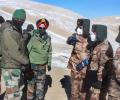
The Indian side forcefully pressed for early resolution of the standoff and particularly insisted on expeditious disengagement in Hot Springs and Gogra, a source said.
Throughout its standoff with India along the Line of Actual Control (LAC), Chinese officials sought to downplay the severity of the crisis, emphasising Beijing's intent to preserve border stability and prevent the standoff from harming other areas of its bilateral relationship with India, the Pentagon said in a report on Tuesday.
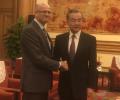
Gokhale's visit for bilateral consultations is taking place amid renewed optimism that the vexed issue of listing of Pakistan-based Jaish-e-Muhammed chief Masood Azhar as a global terrorist by the United Nations, which has been stalled by China, is headed for a resolution in the coming weeks

The Indian Olympic Association (IOA) is open to boycotting Chinese products and sponsors in the wake of the border clash between the two countries at Galwan valley earlier this week. Anti-China sentiments are running high in the country after the first skirmish at the India-China border in more than four decades left at least 20 Indian soldiers dead.

Raking up the border issue, Congress leader Rahul Gandhi on Friday said every individual in Ladakh knows that China has "taken away our land" and claimed that Prime Minister Narendra Modi's assertion that not an inch of land was taken away was "absolutely false".

As the military standoff between India and China drags on along the Line of Actual Control (LAC) in eastern Ladakh, Defence Minister Rajnath Singh said the talks between the two sides are going on well and indicated hope for a resolution of the lingering row.

'Russia remains in a unique position since it has special strategic relations with both India and China and these relationships are independent in nature'

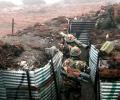
The Chinese military on Thursday said the situation along the India-China border 'at present' is 'generally stable' and both sides have maintained 'effective' communication to resolve the military standoff in eastern Ladakh.
The one-day event organised on Tuesday by the 2010 India-China Development Forum, which was set up with backing of China's top media houses and the Indian Embassy in Beijing, has displayed a heated debate, something that the Chinese media professionals have rarely seen and appeared to have thoroughly enjoyed.

The external affairs ministry said the talks were 'positive'.

'Trump's disregard for norms and institutions could prove very costly for America's social fabric.'
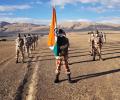
India and China on Friday agreed to hold the next round of military talks at an early date to achieve the objective of complete disengagement in remaining friction points in eastern Ladakh amid fresh sparring between the two sides on the prolonged Line of Actual Control (LAC) standoff.
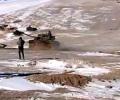
Who knows, the moment of truth in Ladakh may also augur for a giant leap toward boundary settlement with China in the fulness of time. The news that the special representatives of the two countries are planning to meet gives a positive signal, suggests Ambassador M K Bhadrakumar.
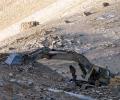
The 11th round of the Corps Commander-level talks began at around 10.30 am at the Chushul border point on the Indian side of the Line of Actual Control (LAC) in eastern Ladakh, they said.

'A lack of strategic trust and the 'persistent security dilemma' prevails between India and China,' points out Dr Rup Narayan Das.
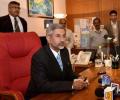
He said the 2 countries have handled border issues in the past.

In seeking visa approvals for engineers from China, the company has reasoned that India lacks the expertise to set up such a solar facility.

"All temporary structures and other allied infrastructure created in the area by both sides have been dismantled and mutually verified. The landform in the area has been restored by both sides to the pre-standoff period," the Army said in a statement.
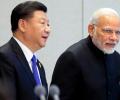
It is apparent that an easing of tensions at the border and a disengagement of troops is on the cards, observes Ambassador M K Bhadrakumar.
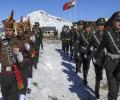
'They also agreed that for the overall development of bilateral relations it was essential to maintain enduring peace and tranquillity in the border areas,' the MEA said in a statement.
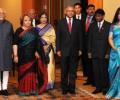
India and China on Monday released the first encyclopedia on their age-old cultural contacts, tracing back their history to over 2,000 years, starting from the visit of Chinese scholar Huen Tsang to India in the 7th century to bring Buddhist scriptures to China.
India-China ties have developed rapidly and the exchanges of high-level visits have forcefully promoted bilateral ties and cooperation for mutual benefit, said Pranab Mukherjee. He met his Chinese counterpart Yang Jiechi over the weekend in New York.

Jaishankar also spoke about how he expected a change in Russia's direction towards the rest of the world and it may likely want multiple options in Asia.

The memoranda of understanding were signed during a day-long 2nd India-China Strategic Economic Dialogue in New Delhi.
'Why has the peace been kept?' 'Basically because there is a balance.' 'Maybe they think that balance has changed.' 'People can make mistakes. People can miscalculate.' 'If that is the cause, then I think what we have done, matching their build-up, etc, it is giving a good account of ourselves in the face-offs.'

'The choice of Dhoka La for the intrusion by Chinese troops is significant and suggests a twin objective of pressuring Thimpu to allow Beijing to establish an embassy there and reinforcing Chinese claims on Arunachal Pradesh,' warns former RA&W officer Jayadev Ranade.

When China protested strongly over the August decision on J&K -- not once but twice -- we ignored it. And to compound matters, we simply turned our back and walked over to the 'Quad' alliance with the US, upgrading it to ministerial level, and thereafter began following the American footfalls on Taiwan and COVID-19 to taunt and humiliate Beijing, observes Ambassador M K Bhadrakumar.

In an interview with The Wall Street Journal ahead of his first state visit to the United States, Modi also talked about the Ukraine conflict, saying some people say that India is neutral but it is on the side of peace.
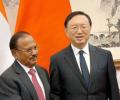
National Security Advisor Ajit Doval and his Chinese counterpart Yang Jiechi will meet in Hyderabad in November first week for informal dialogue on the state of bilateral relations

'Wang Yi said the border issue is important and we should stay committed to peacefully addressing it through consultation and coordination.'

Prime Minister Narendra Modi's bilateral meetings on the sidelines of the BRICS summit in Johannesburg are being finalised, Foreign Secretary Vinay Kwatra said on Monday but did not give a direct reply on the possibility of a meeting between Modi and Chinese President Xi Jinping.
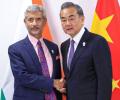
The joint statement said Jaishankar and Wang agreed that both sides should take guidance from the series of consensus reached between leaders of the two countries on developing India-China relations, including not allowing differences to become disputes.

India and China made progress in five-six friction points along the Line of Actual Control in eastern Ladakh through talks in the last three years and efforts are underway to resolve the remaining issues, External Affairs Minister S Jaishankar said on Monday.
